
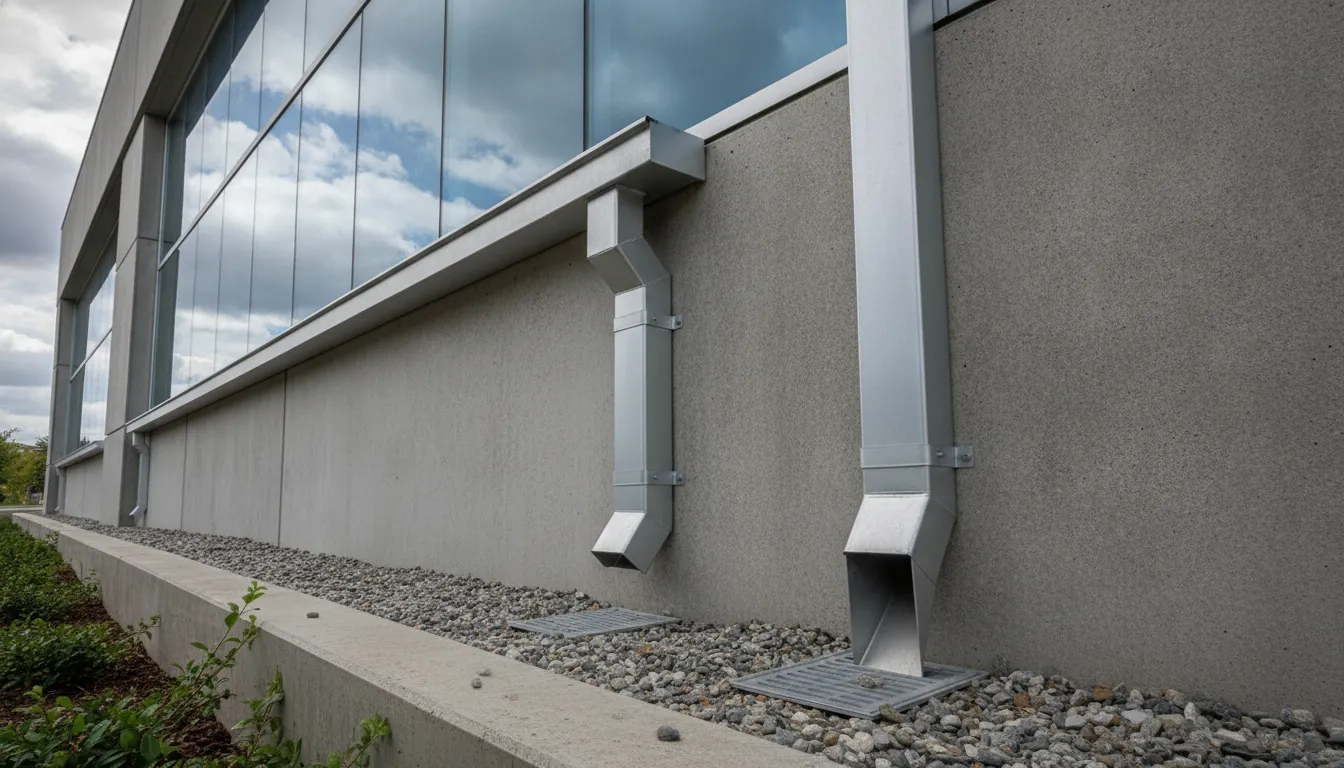
You wouldn’t use a family sedan to haul a full load of construction materials; you’d use a heavy-duty truck designed for the job. The same logic applies to your building’s drainage system. The gutters on your home are designed for a residential roof, but a commercial property with its vast, often low-slope roof, requires a far more robust solution. These buildings need an engineered system built to handle a massive volume of water without failing. That’s the role of commercial gutters and downspouts. They are the heavy-duty workhorses of water management, constructed from stronger materials and designed for higher capacity to protect your investment from intense Texas weather.
Key Takeaways
- Match the System to Your Building: A high-performing gutter system starts with the right materials and size. Choose a durable option like aluminum or steel and ensure the gutters are correctly sized for your roof and Texas rainfall to effectively manage water and prevent damage.
- Insist on a Professional Installation: The quality of the installation is just as important as the materials you choose. Key details like proper slope, secure hanger spacing, and smart downspout placement are non-negotiable for a system that protects your property long-term.
- Make Maintenance a Priority: Regular upkeep is the best way to protect your investment and prevent expensive repairs. Scheduling professional cleanings twice a year keeps your system clear and allows you to catch small issues before they turn into major structural problems.
What Are Commercial Gutters?
When you think about gutters, you probably picture the ones on your own home. But what about larger buildings like schools, local businesses, or warehouses? These properties handle a massive amount of rainwater and require a much more robust solution. That’s where commercial gutters come in. These systems are specifically engineered for durability and high performance, designed to manage water flow from large, often low-slope, roofs.
Unlike standard residential gutters, commercial gutter systems are built to withstand much tougher conditions. They are rigorously tested to meet strict industry standards, ensuring they can handle everything from a sudden Texas downpour to more extreme weather events. Think of them as the heavy-duty version of your home’s gutters, built with the size and strength needed to protect a much larger investment. Their main job is to channel water safely away from the building, preventing costly structural issues and landscape erosion.
Commercial vs. Residential: Key Differences
The most noticeable difference between commercial and residential gutters is their size. While most homes are fitted with 5-inch gutters, commercial buildings typically require 6-inch gutters or even larger, depending on the roof's square footage and local rainfall patterns. This larger capacity is essential for preventing overflow during heavy rain. Beyond size, commercial gutters are also constructed from thicker, more durable materials to handle the sheer volume and weight of the water they collect. They are designed to protect the building’s foundation and surrounding areas from water damage, a principle that’s just as important for a large commercial property as it is for your home.
Why Proper Drainage Is Crucial for Your Property
Whether it’s a sprawling commercial complex or your family home, the goal of a gutter system is the same: protect the foundation. Proper drainage is essential for preventing water from pooling around the base of the building, which can lead to cracks, shifts, and devastating water damage over time. Commercial gutters and downspouts are the first line of defense in this effort. One of the biggest gutter installation mistakes is poor downspout placement. If you have too few downspouts or they are spaced incorrectly, the system can quickly become overwhelmed and overflow. A good rule of thumb is to install at least one downspout for every 20 to 30 feet of guttering to ensure water has a clear and efficient path away from your property.
Exploring Commercial Gutter Types
When you’re choosing a gutter system for your commercial property, the style you pick is just as important as the material. The shape and design of your gutters determine how much water they can handle and how they complement your building’s architecture. The three main styles you’ll encounter are K-style, half-round, and box gutters. Each has its own strengths, and understanding them will help you select a system that not only looks great but also provides the robust protection your property needs against Texas weather. Let's break down what makes each type unique.
K-Style Gutters
K-style gutters are one of the most popular choices for both commercial and residential properties, and for good reason. They feature a flat back for easy installation against the fascia and a decorative front edge that often resembles interior crown molding. This design isn’t just for looks; the shape allows K-style gutters to hold more water than a half-round gutter of the same width. This high capacity makes them an excellent, cost-effective solution for managing the heavy downpours we often see in Texas. Their efficient design ensures water flows smoothly, protecting your foundation and landscaping from runoff.
Half-Round Gutters
If your building has a more traditional or historic architectural style, half-round gutters can be a perfect fit. As the name suggests, these gutters are shaped like a half-circle, offering a classic, elegant look. While often seen on homes, they can be sized up and adapted for commercial use, especially when preserving a specific aesthetic is a priority. The smooth, curved interior of half-round gutters allows water and debris to wash out easily, which can simplify cleaning. Their timeless appearance can add significant curb appeal while still providing effective drainage to channel rainwater safely away from your property.
Box Gutters
For large commercial buildings with expansive roofs, box gutters are the heavy-duty solution. Unlike K-style or half-round gutters that are hung from the roof's edge, box gutters are built directly into the roofline or cornice of the building. This integration gives them a clean, seamless appearance that blends in with the architecture. More importantly, they are designed to be much larger and deeper, allowing them to handle a massive volume of water runoff from big roofs. Because they are custom-fabricated, they are a practical and highly effective choice for warehouses, retail centers, and other large-scale properties needing maximum water management.
Seamless vs. Sectional: Which Is Better?
No matter which style you choose, you’ll face one more critical decision: seamless or sectional? Sectional gutters are sold in pieces and fastened together on-site, creating seams every 10 to 20 feet. Seamless gutters, on the other hand, are custom-made from a single piece of metal to fit the exact dimensions of your building.
The seams in a gutter system are always its weakest points and the most common source of leaks. Every joint is a potential spot for water to escape and cause damage to your siding, foundation, or landscaping. To avoid common gutter problems, it’s best to install a system with as few seams as possible. That’s why we always recommend seamless gutters. They offer superior protection, require less maintenance, and provide lasting peace of mind.
Choosing the Best Materials for Commercial Gutters
Selecting the right material for your commercial gutters is a critical decision that balances durability, budget, and your building’s appearance. Unlike residential systems, commercial gutters need to handle a much larger volume of water from expansive roofs and withstand more demanding conditions. The material you choose will directly impact how well your gutter system performs and how long it lasts, especially with the unpredictable weather we get here in Texas. Let’s walk through the most common options so you can find the perfect fit for your property.
Aluminum
Aluminum is one of the most popular choices for commercial gutters, and for good reason. It’s an excellent all-around performer that offers a great blend of value and reliability. Because aluminum gutters are lightweight and resistant to rust, they won’t corrode in Texas’s humid climate and don’t put unnecessary strain on your building’s fascia.
This material also comes in a wide variety of pre-finished colors, making it easy to match your gutter system to your building’s existing trim and aesthetic. While it’s not quite as tough as steel, modern aluminum is strong enough for most commercial applications and provides a dependable, cost-effective solution for property owners.
Galvanized Steel
When strength is your top priority, galvanized steel is the answer. This material is made by coating steel with a layer of zinc, which protects it from rust and corrosion. The result is a tough, heavy-duty gutter system that can stand up to just about anything, from fallen branches to hail. Products made from heavy-gauge galvanized steel are ideal for large commercial buildings like warehouses, manufacturing plants, and retail centers that have massive roofs.
While it is heavier and often requires a more robust installation, its sheer durability makes it a smart choice for properties that need maximum protection. It’s a true workhorse material designed to handle the intense downpours common in our region without denting or failing.
Copper
If you’re looking for a premium option that combines timeless beauty with incredible durability, copper is in a class of its own. Copper gutters are known to last for 50 years or more because the material is naturally resistant to corrosion and will never rust. Instead of deteriorating, copper develops a beautiful blue-green patina over time, adding a distinguished and elegant look to historic buildings, high-end offices, and custom properties.
While copper is the most expensive material upfront, its longevity makes it a worthwhile long-term investment. You won’t have to worry about painting, and its durability means fewer repairs over the life of your building. It’s the ultimate choice for making a statement while ensuring your property is protected for decades.
How to Pick a Material for Your Climate and Budget
Choosing the right material comes down to three key factors: your local climate, your budget, and your roof’s specific needs. Here in Texas, any of these materials will work, but steel offers the best defense against hail. In terms of budget, aluminum is the most economical, steel sits in the middle, and copper is a long-term investment.
Your roof size is also a major consideration. Most commercial buildings need 6-inch or larger gutters to manage the sheer volume of water. No matter which material you select, its lifespan depends on proper care. Committing to regular maintenance, including cleaning your gutters twice a year, is the best way to protect your investment and keep your system functioning perfectly.
How to Correctly Size and Install Commercial Gutters
Getting commercial gutters installed correctly is about more than just hanging them on the side of your building. It’s a precise science that protects your property from the foundation up. A professional installation accounts for your roof’s specific dimensions, local rainfall patterns, and the unique layout of your property to create a system that channels water safely away. When every detail is handled with expertise, you get a gutter system that works flawlessly during even the most intense Texas storms, giving you lasting peace of mind.
From calculating the right capacity to ensuring every downspout is perfectly placed, each step is critical for preventing water damage, soil erosion, and costly future repairs. Let’s walk through what a correct, professional installation looks like.
Calculating for Roof Size and Rainfall
Choosing the right size for your commercial gutters isn't a guessing game. The most important factors are your roof's total square footage and the maximum rainfall intensity for our area. A larger roof collects more water, requiring wider gutters and more downspouts to handle the volume. A professional will calculate the roof’s drainage area and consider historical rainfall data to recommend a system that won’t get overwhelmed. As a general rule, downspouts are sized to provide one square inch of outlet for every 100 square feet of roof area they drain, ensuring water can exit the system as quickly as it enters.
Getting Downspout Placement and Sizing Right
Where your downspouts go is just as important as the gutters themselves. The primary goal is to direct water far away from your building's foundation. Ideally, downspouts should discharge water at least three to four feet away to prevent soil erosion and stop water from seeping into your foundation or basement. Improper placement is one of the most frequent gutter installation mistakes and can lead to serious structural damage over time. A professional installer will strategically map out downspout locations to work with your landscaping and grading, ensuring water flows away from the property, not toward it.
Setting the Correct Slope and Hanger Spacing
For water to flow freely, gutters must be installed with a slight, consistent slope toward the downspouts. The standard is a drop of about 1/4 inch for every 10 feet of gutter. Without this gentle pitch, water will pool in the middle, creating stagnant puddles that attract pests, add weight, and cause the gutters to sag. Just as crucial is the spacing of the hangers that attach the gutters to your building. When hangers are too far apart, they can’t provide sufficient support, leading to sagging sections that eventually pull away from the fascia, especially under the weight of heavy rain.
Planning for Overflow and Integrated Drainage
Even the best gutter system can be tested by a severe Texas thunderstorm. That’s why a professional installation includes planning for potential overflow. This might involve installing larger outlets or adding strategically placed splash guards to prevent water from spilling over the sides and damaging your siding or landscaping. The system should also be designed to integrate with your property’s existing drainage solutions, like French drains or swales. This holistic approach ensures that the water collected by your gutters is managed effectively from the moment it leaves the downspout until it’s safely off your property.
Common Gutter Installation Mistakes to Avoid
A gutter system is only as good as its installation. Even the highest-quality materials can fail if they aren't put together correctly, turning your investment into a liability. Unfortunately, cutting corners during installation is a common issue, and even small mistakes can lead to big problems like foundation damage, wood rot, and landscape erosion. As a homeowner, knowing what these common errors are helps you understand the value of a professional job and ensures your property gets the protection it deserves. A properly installed system should be a set-it-and-forget-it feature of your home, quietly doing its job without causing you stress.
When you hire a contractor, you’re trusting them to safeguard your home’s structural integrity. However, some installers lack the experience to account for things like roof pitch, local rainfall intensity, and proper load-bearing techniques. This can result in a system that looks fine at first glance but fails during the first heavy storm. From getting the slope wrong to using too many weak points, these mistakes compromise the entire system. By understanding the top installation mistakes we see in the field, you can ask the right questions and feel confident that your home is protected by a system built to last.
Incorrect Pitch or Slope
This one is all about gravity. For your gutters to work, water needs to flow downhill toward the downspouts. This requires a very specific, slight angle, or "pitch." The standard is about a quarter-inch drop for every 10 feet of gutter. If an installer gets this wrong by setting the gutters too flat or, even worse, sloped the wrong way, water will just sit there. Stagnant water not only becomes a breeding ground for mosquitoes but also adds significant weight to the gutters, causing them to sag. Over time, this standing water can damage your fascia boards and create the very leaks you were trying to prevent in the first place.
Using Too Many Seams
Think of seams as the weak links in your gutter system. Every place where two sections of gutter connect is a potential spot for a leak to develop. Traditional, sectional gutters that you might find at a big-box store come in 10-foot pieces, meaning a typical home could have dozens of these vulnerable points. This is why we specialize in seamless gutters. They are custom-formed from a single piece of metal to fit the exact dimensions of your home, eliminating almost all seams. Fewer seams mean fewer chances for failure, giving you a stronger, more reliable system that protects your home without the constant worry of drips and leaks.
Poor Downspout Placement
Downspouts are the exit ramps for all the water your gutters collect. If you don't have enough of them or if they're in the wrong spots, your system will quickly get overwhelmed during a heavy Texas downpour. This causes water to overflow, pouring right down next to your foundation. Just as important is where the downspout directs the water. A common mistake is having the downspout terminate too close to the house. You want to ensure water is channeled at least three to four feet away from your foundation to prevent soil erosion and stop water from seeping into your crawl space. Proper downspout placement is critical for foundation protection.
Improper Hanger Spacing
Gutter hangers are the hidden hardware that fastens the gutter system to your home. If they are spaced too far apart, they can't properly support the weight of the gutter, especially when it's full of water and debris. This leads to sagging, which creates low spots where water pools and can eventually cause the gutters to pull away from the fascia entirely. For a secure installation, hangers should be spaced correctly to handle the load and keep the gutters straight and firmly attached. This small detail makes a huge difference in the longevity and structural integrity of your entire system, ensuring it stays put through intense storms.
Forgetting to Plan for Overflow
Here in Texas, we know that when it rains, it pours. A professionally installed gutter system should be designed to handle the maximum amount of rainfall your roof might see during a severe storm. Forgetting to plan for overflow is a major oversight that often happens with one-size-fits-all approaches. This involves choosing the right size gutters and ensuring there are enough downspouts to manage a sudden deluge of water. An undersized system will overflow, defeating the purpose of having gutters in the first place. A proper plan includes calculating your roof's surface area and pitch to create a system with enough capacity to protect your home, even in the worst weather.
Finding the Right Gutter Style for Your Building
Gutters do more than just channel rainwater; they are a finishing touch that can either complement or clash with your home’s design. Think of them as the frame for your roofline. Choosing the right style is about finding the perfect balance between performance and aesthetics. A well-chosen system protects your foundation from water damage while enhancing your property’s curb appeal. With so many options available, you can select a gutter profile that feels like a natural extension of your home’s architecture, whether it’s modern, traditional, or something in between.
Matching Gutters to Your Building's Architecture
Your gutter system should feel like it belongs. For a home with clean lines and a modern aesthetic, sleek K-style or box gutters offer a sharp, contemporary look. If your property has a more traditional or historic design, half-round gutters can provide a classic, elegant touch that honors its architectural roots. The goal is to create a cohesive appearance where the gutters enhance the overall design instead of distracting from it. A professional installer can walk you through different profiles and colors to find a combination that seamlessly integrates with your siding, trim, and roof, making your home look complete.
Key Features to Look For
Beyond looks, your gutters need to perform. Start by looking for seamless gutters, which are custom-formed on-site to fit your home’s exact dimensions. This eliminates the seams and joints that often weaken and leak in sectional systems. You should also ask about durability. For properties with large or low-slope roofs, it's wise to choose gutters tested to meet rigorous industry standards like ANSI/SPRI GD-1, which ensures they are built for strength. This level of quality is crucial for handling the heavy rainfall we often see in Texas, giving you confidence that your system is up to the task.
Why the Warranty and Reputation Matter
The best gutter system in the world will fail if it’s not installed correctly. That’s why the company you hire is just as important as the product you choose. A common installation mistake is setting the wrong pitch, which prevents water from flowing properly and can lead to pooling, overflows, and potential water damage. To avoid this, look for an installer with a solid local reputation and a portfolio of completed projects. A trustworthy company will offer a strong warranty on both materials and labor. This isn't just a piece of paper; it's a promise that they stand behind their work and are committed to your long-term satisfaction.
Your Guide to Commercial Gutter Maintenance
Think of your commercial gutter system as the unsung hero of your property. It works tirelessly to protect your foundation, roof, and landscaping from water damage. But just like any critical component of your building, it needs regular attention to perform at its best. Proactive maintenance isn’t just another task on your to-do list; it’s a smart investment in your property’s longevity and value. By staying ahead of potential issues, you can prevent minor clogs from turning into major structural problems. A consistent maintenance schedule keeps your drainage system flowing freely, safeguarding your building from the costly consequences of water intrusion and ensuring you get the most out of your initial investment. This guide will walk you through the essentials of keeping your commercial gutters in top shape.
How Often to Inspect and Clean
For most commercial properties in Texas, a good rule of thumb is to have your gutters inspected and cleaned at least twice a year, typically in the spring and fall. If your building is surrounded by trees, you may need more frequent cleanings to keep up with falling leaves, twigs, and pollen. It’s also wise to schedule an inspection after any major storm, as high winds and heavy rain can deposit a surprising amount of debris. This regular maintenance helps prevent clogs and ensures water can flow freely away from your foundation. A professional cleaning is more than just scooping out debris; it’s an opportunity to spot potential problems before they escalate.
Signs It's Time for a Repair or Replacement
During your regular inspections, keep an eye out for red flags that signal your gutters need attention. Visible signs like rust spots, sagging sections that pull away from the building, or cracks and holes are clear indicators of trouble. You should also look for separated joints where gutter sections meet. After a rainstorm, check for standing water in the gutters or ponding water near your building’s foundation. Water overflowing the sides of the gutters during rain is another one of the key commercial gutter repair signs that points to a clog or improper pitch. Catching these issues early can mean the difference between a simple repair and a full replacement.
How Gutter Guards Can Reduce Maintenance
Gutter guards are an excellent way to cut down on the frequency of cleanings and prevent large debris from causing blockages. By filtering out leaves, pine needles, and other materials, they help keep your system clear and functional. However, it’s important to see them as a tool for reducing maintenance, not eliminating it entirely. For guards to be effective, they must be installed correctly. A professional installation will always account for your specific roof drainage needs, downspout capacity, and potential for overflow during heavy Texas downpours. Without proper planning, improperly installed guards can sometimes cause more problems than they solve, so it’s crucial to work with an expert.
Why Professional Upkeep Saves Money in the Long Run
Investing in professional gutter maintenance is one of the most cost-effective decisions you can make for your property. While it might seem like an upfront expense, it pales in comparison to the cost of repairing a damaged foundation, replacing a rotted roof fascia, or dealing with interior water damage. Consistent, professional upkeep is a form of preventive care for your entire building. Annual inspections and routine cleanings can significantly extend a roof's life and prevent the kind of major, unexpected expenses that can disrupt your business. By entrusting your gutter system to experts, you’re not just cleaning out debris; you’re protecting your most valuable asset for years to come.
Related Articles
- Common Gutter Installation Mistakes Homeowners Should Avoid
- Installing Rain Gutters: 5 Rookie Mistakes to Avoid
- Commercial Gutters & Downspouts
- Avoid These Mistakes When Installing Gutters: Size, Seams & More
- Commercial Gutter Repair Signs Building Owners Should Know
Frequently Asked Questions
What really makes commercial gutters different from the ones on my house? The biggest differences are size and strength. Commercial gutters are engineered to handle a much larger volume of water coming off expansive roofs, so they are typically wider, deeper, and made from thicker-gauge metals. Think of it this way: while your home’s gutters protect your family’s foundation, commercial systems are built to protect a much larger investment from the same threat of water damage, just on a massive scale.
With materials like aluminum, steel, and copper, how do I choose the right one for my property? Your choice depends on balancing your budget, durability needs, and the look you want for your building. Aluminum is a fantastic, rust-proof, and cost-effective choice for most applications. If your property is in an area prone to hail or has a very large roof, galvanized steel offers superior strength and impact resistance. For a premium, long-lasting option that adds significant architectural character, copper is an investment that can last for decades with unmatched beauty.
Are seamless gutters actually worth the investment? Absolutely. The joints where sectional gutters connect are their weakest points and where almost all leaks begin. Seamless gutters are custom-made from one continuous piece of metal to fit your building perfectly, which eliminates those vulnerable spots. This means you get a stronger, more reliable system that is far less likely to leak and cause water damage to your siding and foundation. It’s a smarter, long-term solution that provides much greater peace of mind.
How can I tell if my current gutters were installed incorrectly? There are a few clear signs to look for. After it rains, check if water is sitting in pools along the gutter instead of flowing out; this indicates an incorrect slope. Also, look for gutters that are sagging or pulling away from the building, which points to improperly spaced hangers. The most obvious sign is water overflowing the sides during a storm or dumping right next to your foundation, which means the system is either undersized or has poorly placed downspouts.
Do gutter guards completely eliminate the need for cleaning? Gutter guards are a great tool for reducing maintenance, but they don't eliminate it. They do an excellent job of blocking large debris like leaves and twigs from causing major clogs. However, smaller particles and sediment can still wash into the gutters over time. We recommend thinking of them as a way to keep your system flowing freely between professional cleanings, not as a permanent substitute for all upkeep. A quick inspection is still a good idea to ensure everything is working as it should.